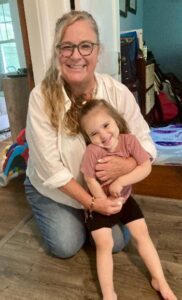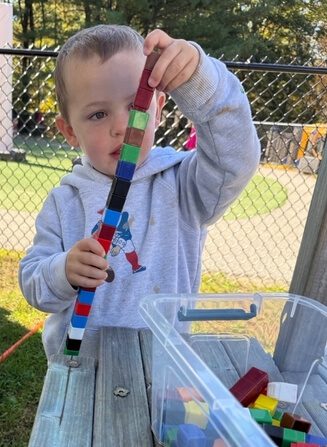
In a Reggio Emilia-inspired classroom, mathematics is not taught as a separate subject. Instead, number literacy grows naturally through children’s investigations, play, and relationships with the world around them. At Woodbridge School, we view math as one of the many languages children use to make sense of their experiences.
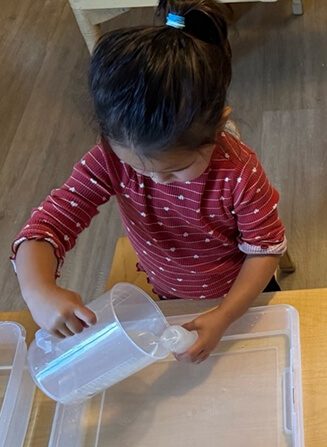
Children encounter mathematical thinking throughout the day as they count materials, compare quantities, measure ingredients during cooking experiences, and notice patterns in nature and their artwork. Whether children are building structures with loose parts, creating maps of their classroom, or documenting the growth of plants in our garden, they are developing foundational skills in counting, sorting, sequencing, estimating, measuring, and problem-solving.
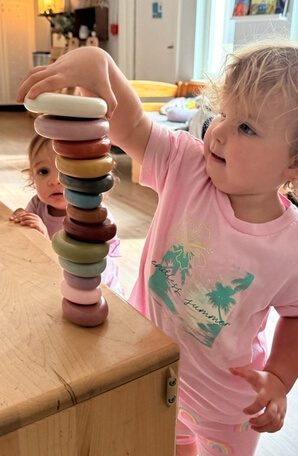
Our teachers carefully observe children’s interests and intentionally weave mathematical concepts into ongoing projects. Teachers encourage children to explain their thinking, test theories, collaborate with peers, and represent their ideas through drawing, building, writing, and discussion. This process helps children develop confidence as mathematical thinkers while building a deep understanding of concepts.
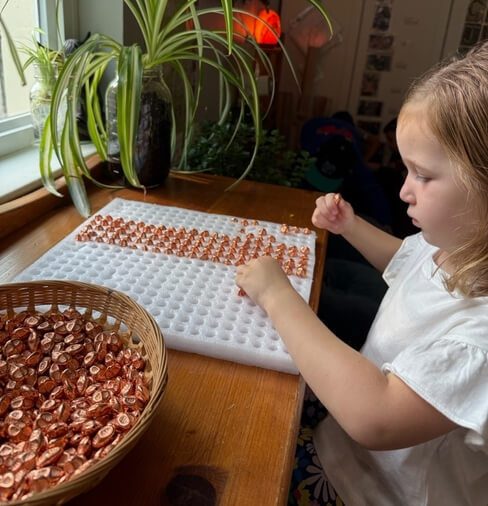
By embedding mathematics into meaningful experiences, we nurture a positive relationship with numbers and problem-solving. Children learn that math is not simply something found in books or worksheets. It is a powerful tool for exploring, understanding, and engaging with the world around them.
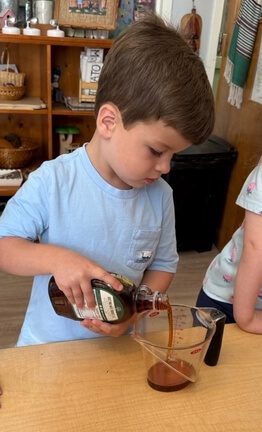
At Woodbridge School in Andover, MA, number literacy begins with curiosity, grows through exploration, and flourishes through authentic experiences that make learning both meaningful and joyful.