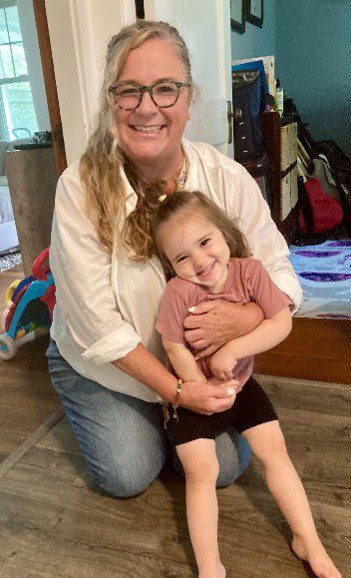
For this article, Ellen Waddill, our Early Intervention Parent Liaison, met with Gretchen Finchum, a speech-language pathologist (SLP) from our Greater Lowell Early Intervention Services program to discuss a common developmental challenge, communication. In this interview-style article, Gretchen shares why we at Early Intervention Servies encourage families to pay attention to hearing when they have concerns about a child’s communication skills.
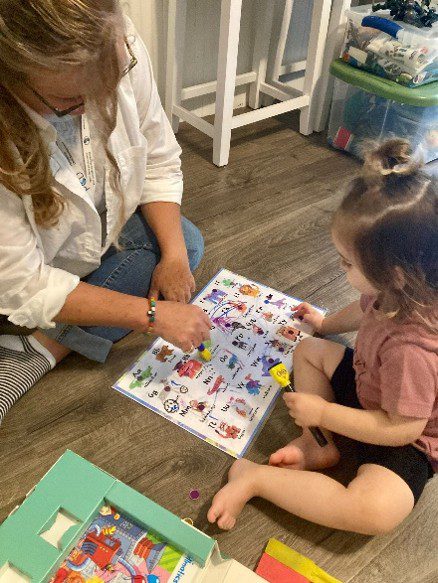
Gretchen shared why hearing matters and offered simple, everyday ways families can support a child’s ability to communicate.
- How are speech and hearing connected?
Hearing and communication are closely connected. Children learn speech and language by listening, so even mild or temporary hearing differences can affect how they hear and how children learn speech sounds and words. When a child cannot consistently hear speech clearly, it may be harder to learn words, understand, or distinguish sounds.
A child may respond to familiar sounds but still have difficulty hearing certain speech sounds clearly. When speech or language concerns arise, a hearing check is one important piece of the puzzle in understanding and supporting a child’s communication.
- What are early signs that hearing may be affecting a child’s language development?
Hearing differences in children are not always obvious. You may notice that your child sometimes seems not to hear you, has difficulty following spoken directions, or is having trouble learning new words or developing speech sounds.
Other signs may include frequently turning up the volume, watching faces closely to understand what is being said, or having a history of frequent ear infections or fluid in the ears.
- When should parents consider talking to their child’s doctor about hearing concerns?
Parents can ask a pediatrician about hearing concerns anytime. You do not need to wait for a speech or language delay.
Even after passing a hearing screening, new concerns are worth checking. When in doubt, check it out!
- Is there anything else you would like families to know about speech and hearing?
Everyday routines help children learn, understand, and communicate. Talk about what you’re doing, use simple words, follow a child’s interests, and pause for responses.
Communication is more than talking… pointing, gestures, sounds, signs, and facial expressions are all important aspects of communicating. Everyday moments are powerful opportunities to build a child’s communication skills.
“As a speech-language pathologist, I encourage families to pay attention to hearing because it is an important part of communication development. You don’t need special toys or activities. Everyday routines and a child’s interests are wonderful opportunities to build communication skills,” summarizes Gretchen Finchum.
At Partners in Child Development’s Early Intervention Services, we encourage parents and caregivers to reach out to us to have a child evaluation should you have any concerns about their development. A doctor’s referral is not needed to reach out for a free evaluation. Getting Started is as easy as 1, 2, 3.
Learn more about our Early Intervention Services.